Monday, 19 March 2012

Christopher Guest Research

Christopher Guest is an American screenwriter, musician, director, actor, and comedian. He is most widely known in Hollywood for having written, directed and starred in several improvisational "mockumentary" films that feature a repertory-like ensemble cast.

However Christopher Guest does not like his films being called mockumentaries. Though shot in documentary, his movies do not mock like an average mockumentary. According to him his films are character studies of "people who become so obsessed by their world that they lose sense and awareness of how they appear to other people". Guest's affection for his characters is a large part of the appeal to other people.

Whilst guest is parodying the characters, he nevere does it in a spiteful way. However Guest's characters are never very good at what they do and yet take themselves very seriously, which is the basis of the comedy in his mockumentaires. This mockumentary format is one in which Guest has proven himself very funny.

Common traits of Guest's mockumentaires:
  • Movies are almost completely unscripted and improvised.
  • He shoots ten minute scenes to let the improviation between actors to happen organically.
  • He always uses a group of actors including: Eugene Levy, Parker Possy, Fred Willard etc..
  • Mock interviews, handheld camera and footage of events are common features of his movies which give off a documentary feel.
  • The documentary feel of the movies is never compromised because the actors stay completely in character. 
During the project we watched some of Christopher Guest's documentaries to help us with getting ideas for our documentary. Here is some information on the documentaries we watched:

This Is Spinal Tap:

This Is Spinal Tap is a mockumentary directed by Christopher Guest. The documentary shows the life of a fictional heavy metal band Spinal Tap, touring and promoting themselves.Guest uses similar techniques in This Is Spinal Tap as he does in all of his documentaries to make the band seem real.

The film satirizes the wild personal behavior and musical pretensions of hard rock and heavy metal musical bands, as well as the tendencies of rock documentaries of the time.He captured the look and feel of the 'rockumentary' so well that many people who watched it thought they were a real band, but how did Christopher Guest achieve this?

He does this by using archive footage of the band at concertswhich implies to the audience that this is a real band who have been together for years.The setting of the concert is also very realistic to what a concert would have been like back in the time of when it was set (the 1980's), he gave the concert this realisitc feel by using real props such as guitars that were made in the 1980's and also the clothing of the band and fans which are just two of the things which make the documentary realistic.

The fact that Guests documentary's are unscripted and mostly improvised play a big role in portraying the band as real. This is most effective during their interviews because it portrays a sense of realism and you feel that the interviews havent been scripted and are made up on the spot.

Best in Show:
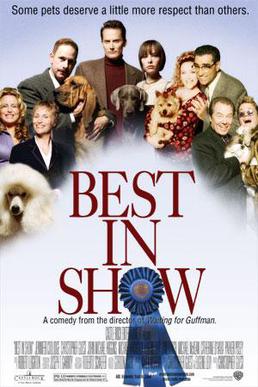
File:BestInShow2000.jpgBest in Show is a mockumentary that was made in the year 2000. It follows five entrants in a prestigious dog show whilst focusing on the slightly surreal interactions among the various owners and handlers as they travel to the show and compete.

Thursday, 15 March 2012

Features of mockumentaires

Mockumentary is a type of film or television show in which fictitious events are presented in documentary format. Mockumentaries normally dont really have a strict script that the actors have to stick to and is more mainly made up on the spot. Mockumentaries are used to analyse or comment on current events and issues by using a fictitious setting, or to parody the documentary form itself. They may be either comedic or dramatic in form.

Mockumentaries have three main features:
  • Deconstruction
  • Parody/Satire
  • Critique
Parody/Satire: A parody is a type of mockumentary that is used to mock an original piece of work. It reinforces an aspect of popular culture, sometimes so well that it is hard to determine whether it is fictional or not.

Critique: Mockumentaries as a critique can parody or satire an aspect of popular culture.

Deconstruction: Mockumentaries as deconstruction subvert and deconstruct the conventions and aspects of the documentary.

Storyboard-First Drafts

When we first started the project we decided to create some rough storyboards which basically map out what is going to be included in our documentary. This is a rough version which only gives us basic detail which will help us to develop our idea. We will be producing another version of these which will be more professional later on in the project when we have a strong idea of exactly what we want to include in our documentary. Here is our first version of the storyboard:


Wednesday, 14 March 2012

Mark Kermode Research

Mark Kermode is an English film critic, musician and a member of the British Academy of Film and Television Arts.
He contributes to Sight and Sound magazine, The Observer newspaper and BBC Radio 5 Live, where he presents Kermode and Mayo's Film Reviews with Simon Mayo on Friday afternoons. He also co-presents the BBC Two arts programme The Culture Show and discusses other branches of the arts for the BBC Two programme Newsnight Review. Kermode writes and presents a film-related video blog for the BBC.


Mark Kermode has a very liberttarian view when it comes down to filem censorship. The libertarian view is that people should be able to view whatever they like. Here is a quote from when Kermode was talking about the topic " We've allowed the censors to view us all as children and we've handed over the reigns of responsibility for our viewing habits because we are not willing to accept that responsibility ourselves".


Mark Kermode is continously in debate Aminatta Forna who is the complete opposite to Kermode and has a moralist view when it comes to censorship. The moralist view is that people shouldn't be able to view what ever they want because they believe that its wrong and some footage can have a bad effect on society e.g copycat theory.

Monday, 20 February 2012

Intial Ideas

Initial ideas for documentary
1)           Documentary on Brighton and Hove Albion moving stadiums.
2)           Documentary on eating healthy.
3)           Documentary about teenagers.
4)           Documentary about the historic town of Brighton.
5)           Documentary about Hove Park School.

                              Final ideas
The documentary that my group are going to be creating is going to be about Brighton and Hove Albion moving from the Withdean stadium to the Amex stadium. The mode of the documentary will show different features of the Amex stadium and will include some hisotic footage of the lead up to building of the stadium e.g the campaign. The style of the documentary will have voiceovers, 1v1 interviews with professionals, historic footage, and up to Date footage as well as fans views and thoughts.

Questionnaire

Before we made our documentary we all decided to create a questionnaire which would help us to decide what sort of documentaries people like to watch and whether they would like our idea, of stadium watch. Below is an example of my questionaire: 

Questionnaire on documentaries

(Please circle your answer)

1. What age group are you in?   
16-25    26-35    36-44    45+
2.  Are you interested in watching documentaries?
Yes      Maybe       No                                                                                             
3. What is your favourite style of documentary?
Mockumentaries      Fly on the wall       Expository      Interactive
Personal
4. What do you prefer to see in a documentary?      
Interviews    Voiceovers     Montages     Both                  
5. What things don’t  you like in the documentaries you have seen before?
………………………………………………………
6. Are you aware of Brighton and Hove Albion moving stadiums?
………………………………………………………
7. Would you watch a documentary on Brighton and Hove Albion moving stadiums?
Yes     No    Maybe  
8. What features would you like to see in this documentary?
……………………………………………………..
9. How interesting is this documentary? (Rate out of 5- 5 is the most interesting)
1                                              2
2                                              4
5 

Evaluation of questionaire findings:

In total we handed out 40 questionnaires, 20 to females and 20 to males, we handed out an equal number to people of each sex because we wanted to get fair judgement of who would be out target market. From the results we found out that males were more likely to watch our documentary so we decided to aim it mainly at males. We also found out from our questionaire that people like a mix of intervies,voiceovers and montages so we decided that we will include a bit of each in our documentary.

We also found out that people dont like watching documentaries were the presenter just stands there are talks the whole time because it gets boring and repetitive so we now know to definately not do that. We also found out that 30 out of the 40 people we handed out the questionaire to knew about Brighton and Hove Albion moving stadiums and that 23 of them would watch a documentary on it so we knew that it would be popular with the public.

Monday, 16 January 2012

Documentary Conventions

  • Narration
  • Voice-overs
  • Reconstruction
  • Dramatic suspense
  • Facts and figures
  • Archive footage and photographs
  • Confrontation
  • Portrays reality
  • Develops audience knowledge